You are getting traffic. People are landing on your automotive website, browsing your pages, and then leaving without doing anything. No enquiry. No demo request. No test drive booking. If that sounds familiar, you are not alone, and the problem is almost never the traffic itself. The problem is what happens after someone arrives.
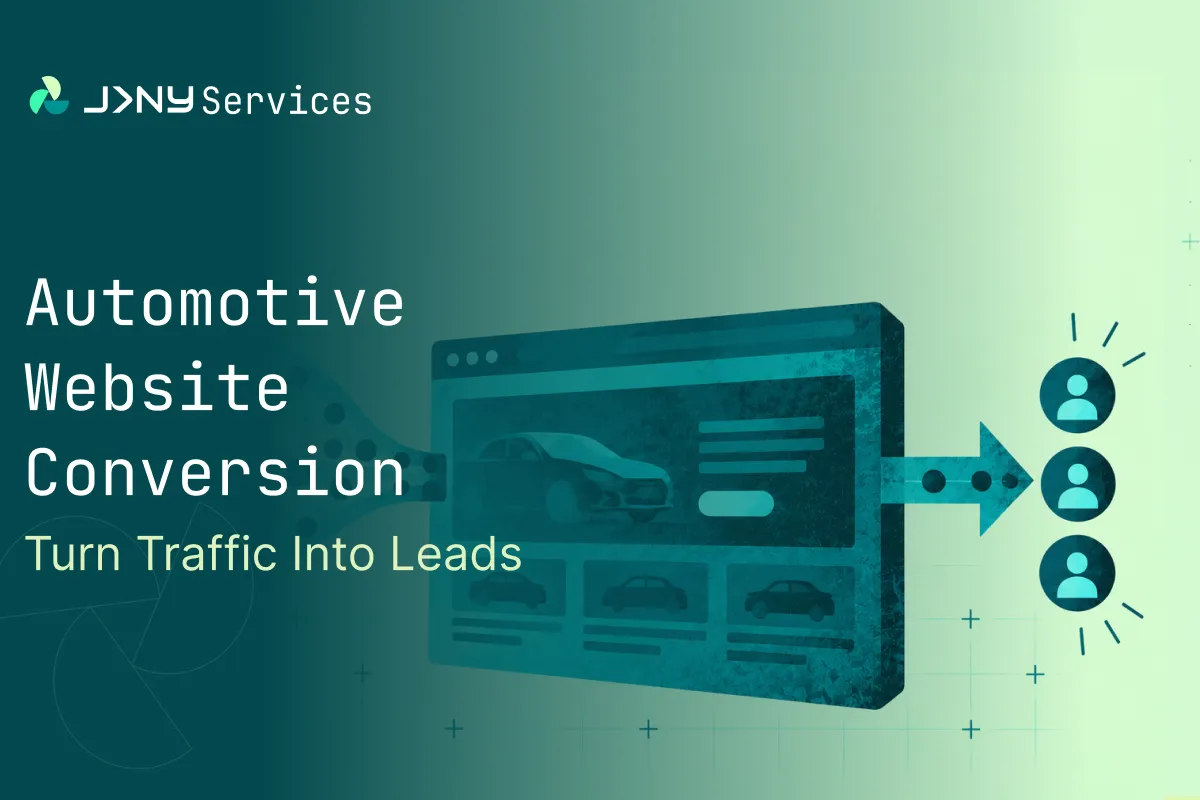
Automotive website conversion is one of the most underinvested areas in automotive marketing, and one of the highest-leverage. The industry standard website conversion rate sits at around 1.5% - meaning 98 out of every 100 visitors leave without taking action. Top-performing dealerships and automotive businesses achieve 3–4% through deliberate optimisation. That gap is not down to better products or more ad spend. It is down to how well the website does its job of building trust, communicating value, and making the next step obvious.
For automotive companies - whether you are a subscription mobility platform, a dealer group, a fleet software provider, or an OEM tech business - the website is your most important sales asset. With 95% of buyers conducting research online before ever speaking to a sales team, your website is almost certainly the first serious impression a buyer forms of your business. Getting that impression right is not a design question. It is a conversion question.
Why Most Automotive Websites Fail to Convert
The most common reason automotive websites fail to convert is not a lack of traffic or a weak product - it is a structural mismatch between what the website was built to do and what buyers actually need it to do.
Most automotive websites were designed for discovery: showcasing inventory, listing features, presenting the brand. But modern buyers arrive having already done most of their discovery elsewhere. By the time someone lands on your website from an organic search or a LinkedIn ad, they are not asking "what does this company do?" They are asking "can I trust this company, and is this the right choice for me?" A website built for the first question fails the second every time.
There are a few specific failure patterns that appear consistently across automotive and mobility websites:
- Vague value propositions above the fold. Phrases like "innovative mobility solutions" or "the future of fleet management" tell a buyer nothing useful. If someone cannot understand what you do and who you do it for within ten seconds of landing on your page, they will leave.
- Complex products described in technical language. For subscription mobility platforms, fleet software, and OEM technology businesses, this is especially damaging. Buyers do not want a feature list. They want to understand the outcome - what changes for them if they choose your product.
- Missing or hidden pricing information. Hiding pricing behind a contact form creates friction and signals a lack of transparency. Research on B2B SaaS pricing pages found that conversion rates drop by 2-3%simply by removing transparent pricing. In automotive subscription specifically, buyers need to see that the monthly fee includes insurance, maintenance, and registration. "One price, no surprises" is not a marketing line - it is a conversion lever.
- No social proof at the decision-making moment. Testimonials, client logos, and case studies are not decorative. They trust infrastructure. For high-consideration purchases, buyers need to see that people like them have made the same choice and been satisfied with the outcome.
- Poor mobile experience. More than 60% of automotive website traffic now arrives on mobile. A website that is slow, hard to navigate, or loses information on a smaller screen is losing the majority of its visitors before they have even had a chance to be persuaded.
The Trust Engine: What Actually Drives Automotive Conversion
Conversion in automotive is not primarily a UX problem. It is a trust problem. Buyers are making high-consideration decisions - about vehicles, platforms, and long-term contracts - and they are looking for any signal that makes the decision feel safer or less safe. Your website is either building that confidence or eroding it.
The trust signals that matter most in automotive website conversion are specific and concrete:
- Real customer evidence. Case studies from recognisable businesses, testimonials with names and company details, and review scores from independent platforms carry far more weight than generic "trusted by leading brands" copy.
- Outcome-led messaging. Every product section on an automotive website should answer the question a buyer is actually asking: what does this do for my business? "Reduce fleet downtime by 30%" converts better than "real-time telematics dashboard." "One monthly price including insurance and maintenance" converts better than "flexible subscription options available."
- Consistent, accurate information. Buyers who encounter contradictory information across your website, ads, and listings will not flag it to you - they will simply leave. 88% of consumers say they would use a business that responds to all reviews, and the same logic applies to consistency: buyers reward businesses that maintain the same message everywhere.
- A credible team and company presence. For B2B automotive purchases especially, buyers are not just evaluating the product - they are evaluating the vendor. Named team members, clear company history, and genuine industry expertise signals - thought leadership content, sector-specific case studies - all contribute to a buyer's confidence that your business will be there for them after the contract is signed.
Conversion Structure: Getting the Architecture Right
Even with the right trust signals in place, poor website structure kills conversion. There are a few architectural principles that consistently separate high-converting automotive websites from those that waste traffic.
The most important is clarity of the next step. At every stage of a buyer's visit, from the homepage to a product page to a pricing section, there should be one obvious, low-friction action available. Not three CTAs competing for attention. One. For most automotive businesses, the primary conversion goal should be a demo, a consultation, or a test drive booking. Everything on the page should make that action feel like the natural, obvious next move.
Page speed is also non-negotiable. Google's research shows that a mobile page taking three seconds to load instead of one increases bounce probability by 32%. At five seconds, that probability rises to 90%. Automotive websites are traffic-heavy by nature and attract high-intent, research-ready visitors. Losing them to slow loading is pure waste.
Finally, the handoff from digital to human must be seamless. 65% of automotive leads do not hear back from a sales team within 24 hours of returning to a website and that is where conversion breaks down most often. Generating the enquiry is only half the job. The speed and quality of what happens next, how quickly someone is followed up, how relevant the response is, and whether the conversation acknowledges the research the buyer has already done, determines whether that enquiry becomes a deal.
Applying This to Automotive and Mobility Businesses
The principles above apply across automotive segments, but the specific application varies by business type.
For consumer-facing businesses - dealerships, subscription platforms, EV services - the focus is on removing ambiguity around pricing, building peer trust through reviews, and making the digital-to-in-person handoff feel smooth rather than jarring. Buyers who researched online want their knowledge acknowledged, not reset when they arrive at a showroom or on a call.
For B2B automotive businesses - fleet software, dealer technology, OEM platforms - the website needs to do more specific work. Senior buyers evaluating a multi-year software contract are not just assessing the product - they are assessing whether your business is the kind of partner they can rely on. That means your website needs evidence of comparable deployments, transparent commercial terms, clear explanations of implementation and support, and a level of professionalism that signals operational maturity. A polished, credible digital presence is not cosmetic in this context - it is part of the product evaluation, and buyers will draw conclusions from it accordingly.
At JRNY Services, our approach to automotive website conversion starts with foundations: clear messaging, a site structure built around the buyer's decision-making process, and trust signals placed where they do actual work. We do not rebuild websites for aesthetics. We rebuild them to convert - because that is where marketing investment either pays off or leaks away.
Your Website Should Be Earning Its Place
Most automotive businesses treat their website like a brochure - something you build, launch, and move on from. But a website isn't a one-time project. It's a sales conversation happening thousands of times a day without you in the room.
If people are landing on your site and leaving without getting in touch, that's not a traffic problem. It's a trust and clarity problem. More ad spend won't fix it. What fixes it is making sure the right message is in front of the right person at the right moment, and that the next step is obvious when they're ready to take it.
That's the work we do at JRNY Services. If you want to know exactly where your site is losing people and what it would actually take to fix it, we offer a website and conversion audit for automotive and mobility businesses.
FAQs
1. How do I improve automotive website conversion?
Honestly, most sites don't need a redesign, they need clarity. Start by checking whether someone landing on your homepage for the first time would understand within ten seconds what you do, who it's for, and what to do next. If the answer is no, that's your first fix.
From there: make pricing less of a mystery, let real customers do some of the talking (testimonials, case studies, logos), and give people one obvious next step rather than five competing ones. On the technical side, check your mobile load speed, the majority of automotive research happens on a phone, and slow pages bleed visitors before they've read a word. Done consistently, these changes move conversion rates from the industry average of around 1.5% to somewhere in the 3–4% range.
2. Why is my automotive website getting traffic but no leads?
Usually it comes down to one thing: buyers don't feel confident enough to reach out yet. Automotive is a high-consideration category - nobody fills in an enquiry form unless they already trust you enough to start a conversation.
Walk through your site and ask: does this build confidence, or does it raise questions? Vague claims, no pricing, no evidence that other people have bought and been happy, these all quietly push people out the door. The fix isn't complicated: be specific about what you offer, show proof that it works, and make it easy to take the next step.
3. What are automotive website best practices for B2B companies?
B2B automotive buyers, whether they're evaluating fleet software, dealer tech, or a mobility platform, are doing serious due diligence before they ever speak to anyone. They want to know the product works, that the vendor is credible, and that someone similar to them has already made this decision and come out fine.
That means your site needs to do a few things well: talk about outcomes rather than features, show case studies from businesses that look like your target buyer, be upfront about commercial terms so people can qualify themselves, and present the company in a way that signals you'll still be around and responsive two years into the contract. For complex products, a plain-language "how it works" section earns its place, it reduces the number of people who bounce at the evaluation stage simply because they couldn't picture how the product fits their world.